The Genetics of Resilient Fish in Sustainable Aquaculture
Not all fish are created equal. Even within the same species, individual fish differ in growth rate, disease resistance, stress tolerance, and reproductive success. Many fish farms focus heavily on environmental factors such as feeding, water quality, and stocking density, but often overlook one of the most important drivers of long-term productivity: genetics. According to NOAA Fisheries, genetic selection in aquaculture often targets traits such as improved growth rate, disease resistance, feed conversion, and product quality.
Understanding the genetics of resilient fish can help aquaculture producers build stronger, healthier populations that perform better under real-world farming conditions.
Understanding Resilience in Fish
Resilient fish are those that survive and thrive under changing or imperfect conditions. They are better able to tolerate temperature fluctuations, resist common pathogens, and maintain steady growth even when nutrition is less than ideal or water quality temporarily declines.
These characteristics are strongly influenced by DNA and can be passed from one generation to the next through selective breeding. The FAO’s aquaculture breeding and genetics resources emphasize the importance of managing aquatic genetic resources effectively to support sustainable aquaculture development.
Resilience is often polygenic, which means it is controlled by multiple genes working together and interacting with the environment. Traits such as immune system strength, stress response, and metabolic efficiency are shaped by complex genetic pathways. Research published through PubMed Central notes that selective breeding for improved disease resistance has proven to be an effective strategy for reducing infectious disease impacts in aquaculture species.
Selective Breeding for Better Performance
One of the most effective ways to improve aquaculture outcomes is through selective breeding. Farmers can choose broodstock that consistently show desirable traits such as fast growth, strong disease resistance, better feed conversion, or tolerance to low oxygen conditions. The FAO selective breeding manual was developed specifically to help aquaculturists improve cultured fish populations through structured breeding programs.
Over multiple generations, these traits become more common within the population. The result is a stock of fish that performs more reliably and requires fewer costly interventions. This can also reduce dependence on antibiotics, chemical treatments, and highly controlled environments. WOAH has highlighted disease prevention, aquatic animal health, and improved management practices as central to more sustainable aquaculture systems, especially as the industry works to reduce risks linked to disease and antimicrobial resistance.
Why Genetic Diversity Matters in Aquaculture
The genetics of resilient fish is not only about selecting the strongest individuals. It is also about maintaining diversity within the population.
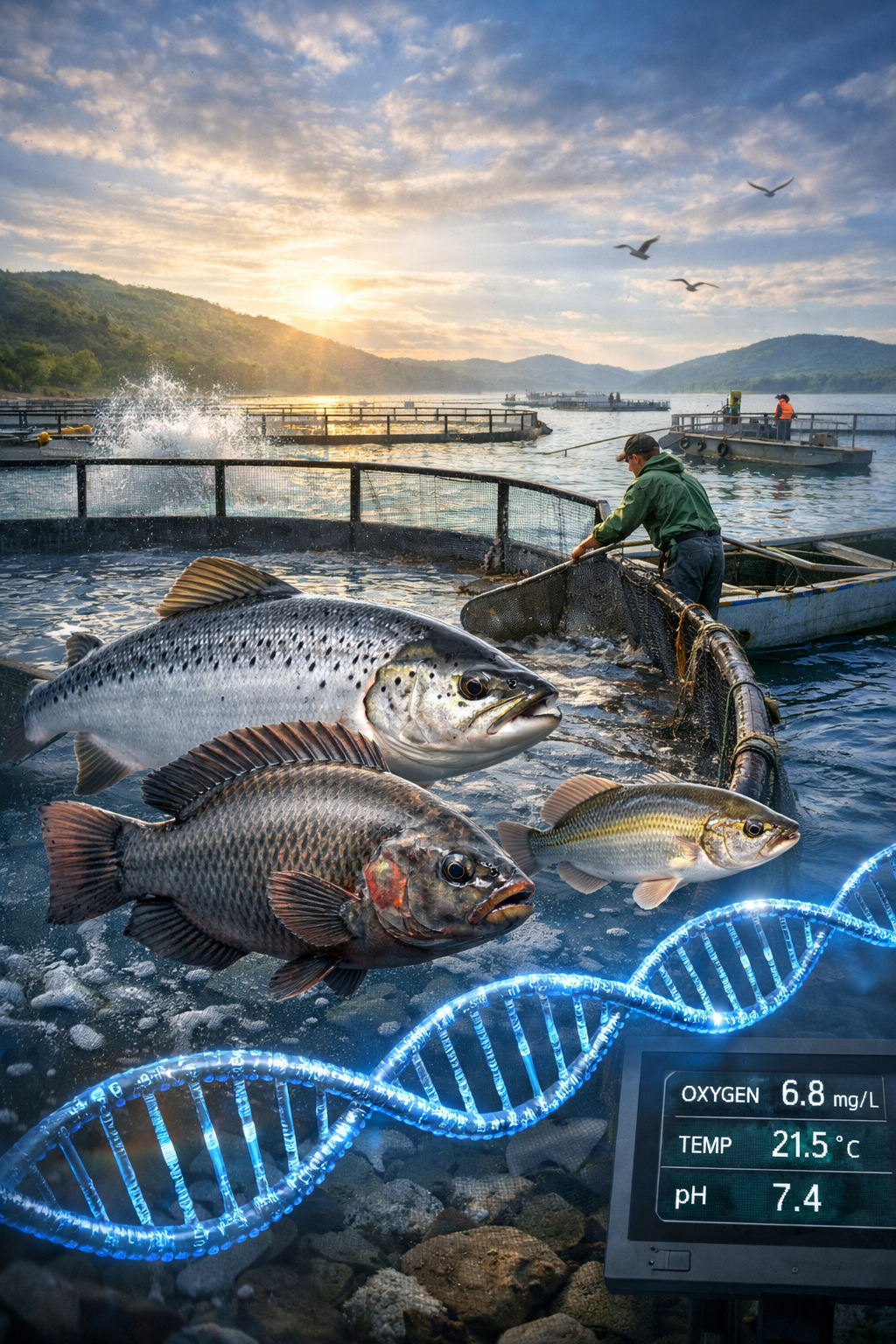
Genetic diversity helps prevent inbreeding, which can reduce growth, weaken immune function, and lower the ability of fish to adapt to changing conditions. FAO guidance on inbreeding and broodstock management explains that loss of genetic variation can make selective breeding less effective over time, while inbreeding increases homozygosity and can reduce the adaptive capacity of farmed populations.
Fish farms that source broodstock from multiple lineages, or occasionally incorporate outside genetic material where appropriate and legal, often build more adaptable populations than farms relying on a single closed line. FAO also notes that farmers can maintain higher genetic diversity by using more brooders, avoiding close-relative mating, and keeping careful records of production practices. See FAO’s guidance here.
How Genetics and Environment Work Together
Genetics sets the potential, but the environment determines how fully that potential is expressed. Even fish with strong genetic resilience can underperform if farming conditions are poor. Water quality, nutrition, stocking density, and stress management still matter greatly.
The most successful aquaculture systems align good genetics with strong farm management practices. Fish with a genetic tolerance for low oxygen may survive stressful pond conditions better than others, but they will still grow faster and remain healthier if aeration is adequate and stocking density is properly managed. Genetics and environment are partners; neither one alone is enough to guarantee success.
The Long-Term Value of Resilient Fish
Resilient fish are built by DNA as much as they are shaped by daily care. Understanding the genetics behind disease resistance, stress tolerance, and growth potential allows farmers to develop populations that are more dependable, efficient, and profitable.
Fish farms that invest in selective breeding, protect genetic diversity, and combine those efforts with sound environmental management gain several long-term advantages. These include more stable growth, lower mortality, reduced treatment costs, and greater adaptability when conditions change. FAO has said that wider and appropriate application of genetic improvement in aquaculture can significantly strengthen sustainable food supply and long-term productivity.
In aquaculture, genetics is the foundation of resilience and long-term profitability. It is not optional.
For more valuable information on sustainable fish farming, visit EAT Community.
Related Articles & References
- FAO – Selective Breeding Programmes for Medium-Sized Fish Farms
- NOAA Fisheries – Aquaculture Genetics & Genomics Tools
- FAO eLearning – Aquaculture Breeding and Genetics
- FAO – Aquatic Genetic Resources
- PubMed Central – Genetics and Genomics of Infectious Diseases in Key Aquaculture Species
- FAO – Inbreeding and Brood Stock Management
- FAO – Understanding Aquaculture
- WOAH – Aquatic Animal Health Strategy
- WOAH – Advancing Aquaculture Health Research