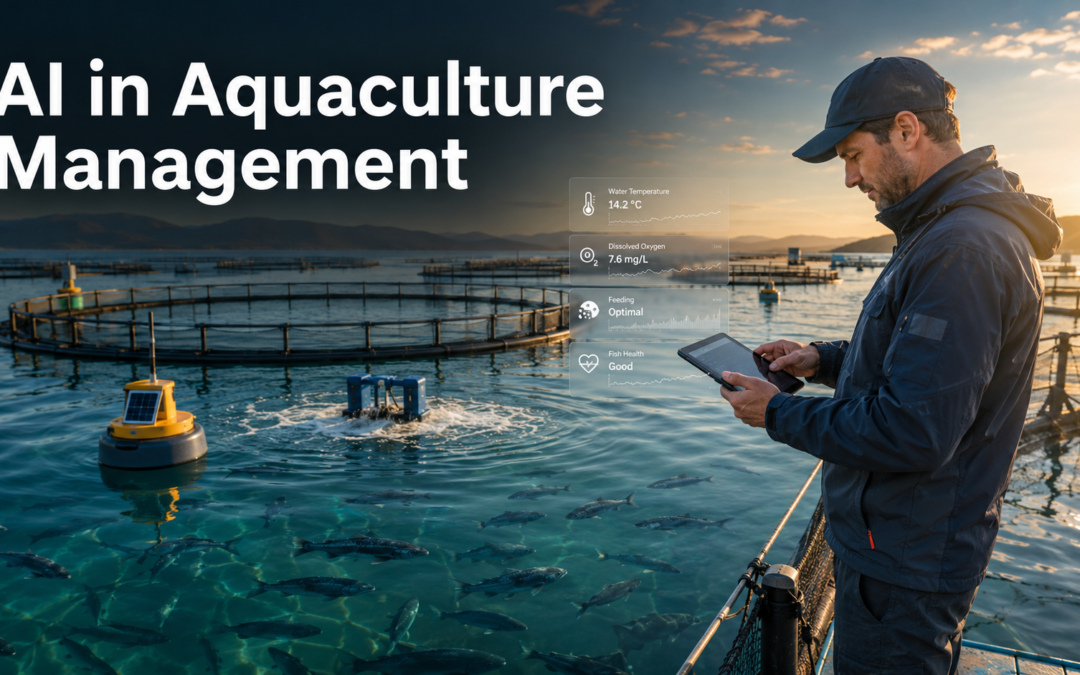
Artificial intelligence is changing the way aquaculture farms monitor fish, manage resources, and make daily production decisions. By combining sensors, cameras, automated equipment, and data analysis, AI can turn large amounts of farm information into practical recommendations.
Instead of relying only on periodic observations, farmers can use AI-supported systems to monitor water quality, feeding activity, fish behavior, health indicators, and environmental conditions continuously. These tools can identify patterns that may be difficult to notice through visual inspection alone.
However, artificial intelligence is not meant to replace experienced farm managers. Its greatest value comes from helping people make faster, more accurate, and better-informed decisions.
What Is Artificial Intelligence in Aquaculture?
Artificial intelligence in aquaculture refers to computer systems that analyze farm data, recognize patterns, predict potential problems, and recommend or automate specific actions.
These systems can collect information from:
- Water-quality sensors
- Underwater cameras
- Automated feeders
- Fish-behavior monitoring systems
- Weather stations
- Production records
- Mobile applications
- Internet of Things devices
Machine-learning models can then compare current information with historical data to identify unusual conditions, estimate future performance, or recommend operational changes.
The Food and Agriculture Organization’s digital aquaculture resources highlight how digital tools can support water-quality monitoring, feed management, disease tracking, and farm decision-making.
Continuous Monitoring Supports Earlier Detection
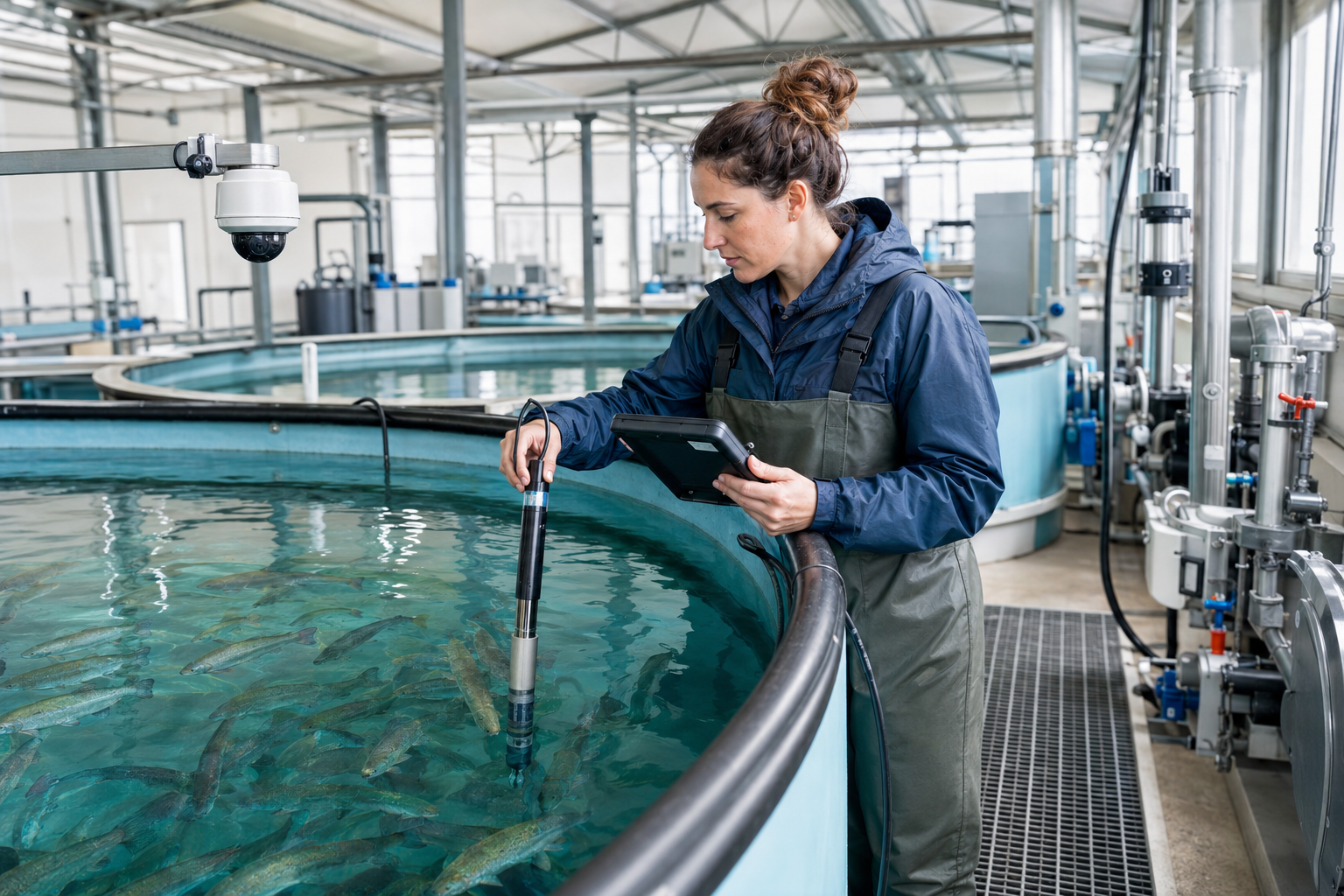
Water conditions can change quickly, especially in intensive ponds, tanks, cages, and recirculating aquaculture systems. Temperature, dissolved oxygen, pH, salinity, turbidity, and ammonia can all affect aquatic animal health and growth.
Traditional testing provides information from a particular moment. In contrast, connected sensors can collect measurements throughout the day and night. AI can analyze these readings continuously and look for sudden changes or developing trends.
For example, the system may detect:
- A gradual decline in dissolved oxygen
- An unexpected increase in water temperature
- Unusual pH fluctuations
- Conditions associated with ammonia buildup
- Differences between ponds or production units
- Recurring problems during particular times of day
This can give farmers more time to inspect equipment, increase aeration, adjust water flow, reduce feeding, or take other appropriate action.
A NOAA guide to aquaculture water quality explains how temperature influences dissolved gases and other production conditions. AI does not change these biological relationships—it helps farmers monitor them more consistently.
AI Makes Feeding More Precise
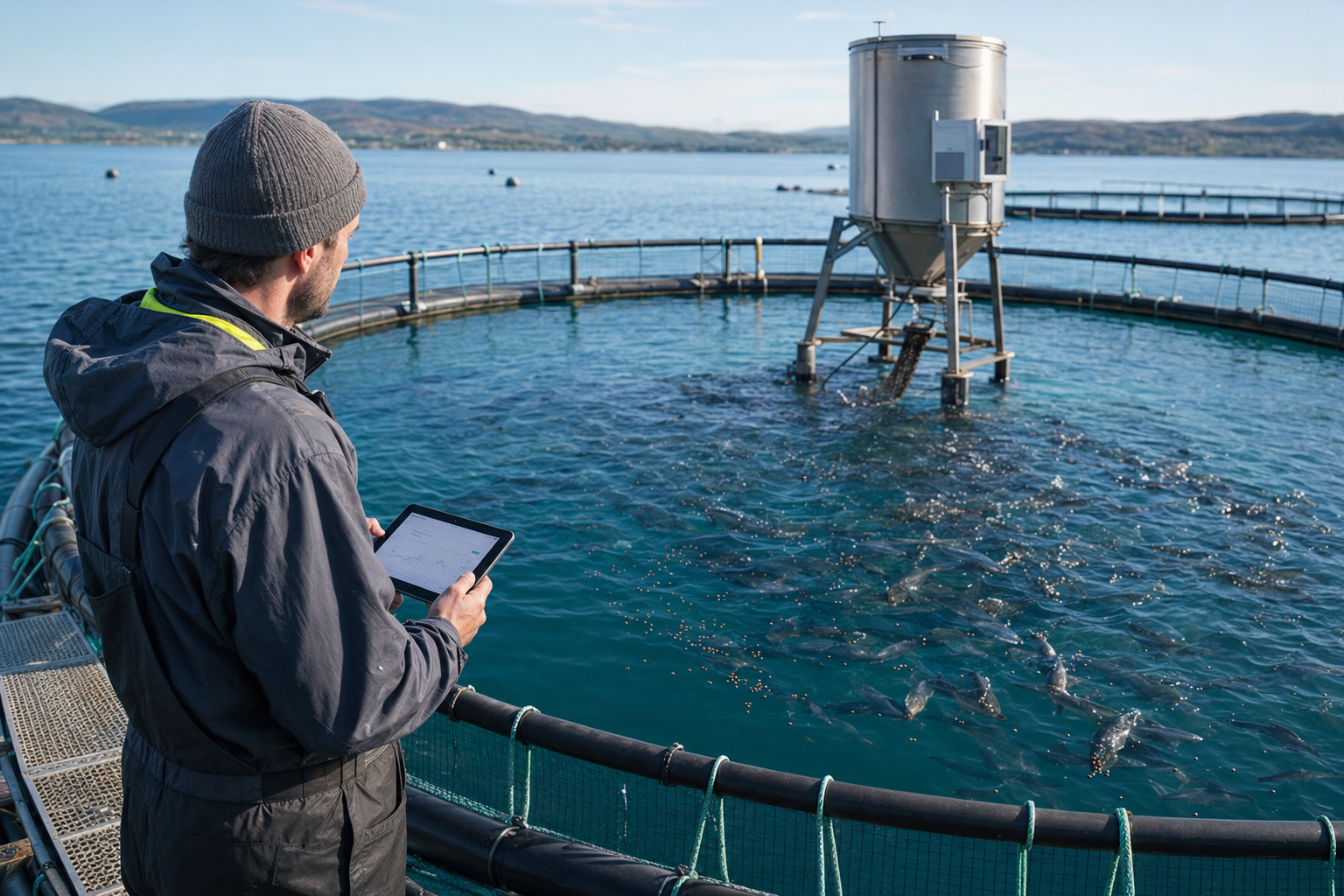
Feed is one of the most significant operating costs on many aquaculture farms. Overfeeding wastes money, reduces feed-conversion efficiency, and can contribute to poor water quality. Underfeeding, meanwhile, may slow growth and increase competition among animals.
AI-supported feeding systems use underwater cameras, acoustic equipment, sensors, and behavioral data to estimate:
- Whether fish are actively feeding
- How quickly feed is being consumed
- When feeding activity begins to decline
- How much biomass is present
- Whether environmental conditions are suitable for feeding
The system can then recommend or automatically adjust the feeding rate.
Research into AI-driven aquaculture technologies describes how underwater imaging and hydroacoustic tools can monitor feeding behavior in real time. When properly calibrated, these technologies can help reduce waste while supporting healthy growth.
More precise feeding can also lower the amount of uneaten feed and excess nutrients entering the surrounding environment.
Disease and Stress May Be Identified Earlier
Disease outbreaks can cause serious financial losses, particularly when warning signs are discovered only after fish stop eating or mortality increases.
Artificial intelligence can help identify early indicators of stress by analyzing changes in:
- Swimming speed
- Schooling behavior
- Feeding response
- Surface activity
- Body position
- Color or visible appearance
- Water-quality conditions
- Mortality patterns
Computer-vision systems may detect behavioral changes that are too subtle or gradual for workers to recognize during routine inspections. When combined with environmental and production data, these observations can create an early-warning system.
However, an AI alert should not be treated as a final diagnosis. It should prompt further inspection, water testing, sampling, or consultation with an aquatic animal health professional. Human expertise remains essential when determining the cause of a health problem and selecting an appropriate response.
A review of artificial intelligence applications in aquaculture discusses the use of cameras, sensors, and machine learning to monitor fish behavior, health, feeding, and water resources.
Growth Predictions Improve Production Planning
Estimating growth and biomass accurately is important for feeding, stocking, harvesting, and marketing. Conventional sampling can be labor-intensive and may temporarily stress the animals.
AI-supported imaging systems can estimate fish size and biomass from photographs or underwater video. These measurements can then be combined with feeding records, water conditions, stocking data, and previous production results.
This information can help farmers predict:
- Expected growth rates
- Feed requirements
- Future biomass
- Harvest dates
- Production volumes
- Stocking-density adjustments
- Potential supply for buyers
Better forecasting can also help producers coordinate labor, processing, transportation, and sales more effectively.
Automation Reduces Repetitive Work
Artificial intelligence becomes especially useful when it is connected to automated farm equipment. Depending on the system and the level of human oversight, AI may help operate:
- Feeders
- Aerators
- Pumps
- Water-control systems
- Filtration equipment
- Lighting
- Sorting and grading equipment
- Alarm and notification systems
For example, a monitoring system could detect declining dissolved oxygen and send an alert. A more advanced system might automatically activate an aerator while notifying the farm manager.
Automation reduces the need for constant manual adjustment and can help maintain stable production conditions outside regular working hours. Nevertheless, farms should maintain backup procedures in case sensors, communications, software, or automated equipment fail.
AI Can Improve Resource Efficiency
Aquaculture profitability depends on using feed, energy, water, labor, and equipment efficiently. Even small inefficiencies can become expensive when repeated across large farms or multiple production cycles.
AI can compare data from different ponds, cages, tanks, or facilities to identify where resources are being wasted. It may reveal that one production unit consistently uses more feed, requires more aeration, or produces slower growth than similar units.
Farm managers can use these findings to improve:
- Feed-conversion ratios
- Water use
- Energy consumption
- Labor scheduling
- Equipment maintenance
- Stocking strategies
- Waste management
The FAO’s discussion of sustainable aquaculture in action recognizes digitalization and capacity building as important components of future aquaculture development.
Historical Data Supports Better Long-Term Decisions
The value of AI increases as a farm develops reliable records across multiple production cycles. Instead of depending entirely on memory or isolated spreadsheets, farmers can build a searchable history of production performance.
They can compare:
- Species and production batches
- Seasonal conditions
- Feed types
- Stocking densities
- Disease events
- Water-quality patterns
- Growth and survival rates
- Harvest results
These comparisons can help managers understand why one cycle performed better than another. Over time, the farm can refine its practices using its own evidence rather than relying solely on general recommendations.
Challenges of Adopting AI in Aquaculture
Although AI offers considerable potential, successful implementation requires more than purchasing new technology.
Common challenges include:
- High initial equipment costs
- Limited internet access in remote locations
- Poor-quality or incomplete farm data
- Sensors that require regular cleaning and calibration
- Systems that may not work equally well for every species
- Lack of staff training
- Compatibility problems between different technologies
- Data ownership and cybersecurity concerns
- Overreliance on automated recommendations
AI models are only as dependable as the information they receive. A damaged sensor, dirty camera, incorrect calibration, or poorly trained model can produce misleading results.
Therefore, farms should introduce AI gradually, test it under local conditions, and compare its recommendations with professional judgment.
How to Begin Using AI on an Aquaculture Farm
Farmers do not need to automate an entire facility at once. A smaller, carefully measured pilot project is usually a practical starting point.
1. Identify the most expensive or recurring problem
Begin with a specific challenge, such as excessive feed use, low nighttime oxygen, inconsistent growth, or delayed disease detection.
2. Improve data collection
Make sure sensors and production records are reliable before introducing advanced analysis.
3. Start with one pond or production unit
Testing the technology on a limited scale makes it easier to evaluate results and correct problems.
4. Establish human oversight
Decide which actions require manager approval and which low-risk adjustments may be automated.
5. Measure performance
Track indicators such as feed-conversion ratio, growth, survival, labor hours, energy use, and operating cost.
6. Expand only after proving the value
Once the system produces dependable results, it can be adapted to other parts of the operation.
The Future of AI in Aquaculture Management
Artificial intelligence is helping aquaculture become more predictive, efficient, and data-driven. It can strengthen water-quality monitoring, improve feeding decisions, detect potential health problems, estimate growth, automate routine operations, and support long-term planning.
The technology is most effective when it combines reliable data with the knowledge of experienced farmers, technicians, scientists, and aquatic animal health professionals.
AI should not replace human expertise. Instead, it should extend that expertise by providing faster analysis, earlier warnings, and clearer information. When used responsibly, artificial intelligence can help aquaculture businesses improve profitability while reducing waste and supporting better environmental outcomes.
Join the Ecolonomic Action Team
Would you like to learn more about artificial intelligence, aquaculture, sustainable business, and innovative ways to make a positive environmental impact?
Join the Ecolonomic Action Team Community. EAT connects entrepreneurs, growers, landowners, environmental professionals, and lifelong learners who want to create practical solutions that benefit both people and the planet.
Explore new ideas, learn from experienced professionals, and discover how innovative technologies can help you make a little money while making the planet better.
References and Related Resources
- FAO: Digital Technologies for Improving Small-Scale Aquaculture
- FAO: Sustainable Aquaculture in Action
- NOAA: A Fish Farmer’s Guide to Understanding Water Quality
- AI-Driven Aquaculture: A Review of Technological Advancements
- Exploring Opportunities of Artificial Intelligence in Aquaculture
- Artificial Intelligence-Based Aquaculture Systems
- Internet of Things Sensors for Aquaculture Water-Quality Monitoring